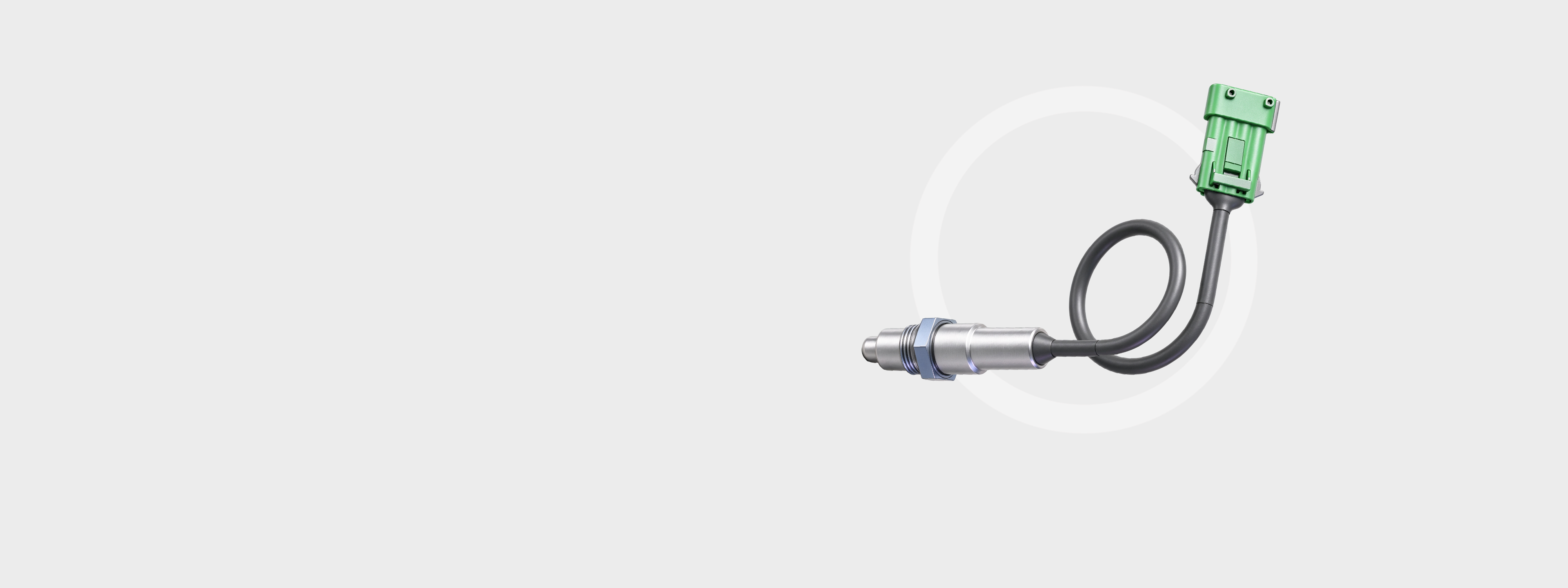
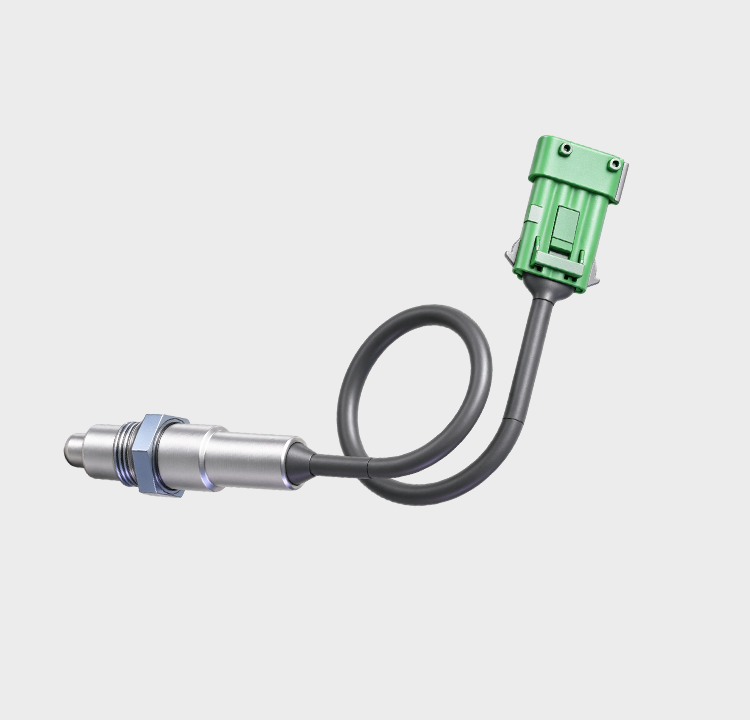
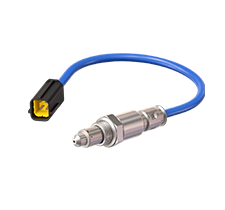
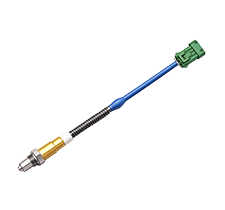
The oxygen sensor for automobile was used to monitor the oxygen concentration in the engine exhaust gas。the engine can Precisely control the amount of fuel injection through output signals (voltage signals or current signals) fed back by ECU and keeping the engine in the optimal combustion state at all times. When combined with the three-way catalytic converter, it can effectively reduce more than 80% of the harmful components in vehicle exhaust, saving 5% to 20% of fuel.
Mounting bolt size: M18X1.5-6e; Hexagonal opposite side size: 22mm;
Installation torque: 40~60 N•M;
Normal operating temperature range:260℃ ~ 850℃
Good reliability; Short ignition time; Stable output signal;
Strong anti-poisoning ability;
Good sealing performance, fast response speed;
Appearance and customer interface can be compatible with mainstream OEM;
Oxygen sensors are used in the configuration of modern engine management systems to detect the oxygen content of the exhaust gases emitted by the engine, thereby determining the actual state of the air-fuel mixture in the engine at any given time. They generate electrical reaction signals and feed them back to the engine electronic control module (ECM) to serve as an important basis for the closed-loop fuel correction control of the fuel management subsystem. This enables the fuel management subsystem to more accurately control and adjust the air-fuel mixture ratio in the engine under various operating conditions. In most cases, the system is kept in the ideal air-fuel ratio operating state to achieve better emission control characteristics and fuel economy.
The oxygen sensor is based on a multi-layer ceramic element with a flat structure. The zirconia element is a ceramic base element filled with numerous micropores and coated with a zirconia coating, which is exposed to the engine combustion exhaust gas. The inner side of the coating communicates with the atmosphere through ceramic elements containing micropores. The differential voltage signal is formed by the difference of oxygen content between the inner and outer electrodes of zirconia.
When the zirconia element is heated by an electric current or by engine combustion exhaust gas flowing through the sensor, the air passes through the ceramic base element filled with numerous micropores into the inner electrode of the zirconia element, and the combustion exhaust gas flows through the outer electrode of the zirconia. Oxygen ions will move from the inner zirconia electrode to the outer electrode, and a simple galvanic cell is formed between the inner and outer electrodes of the sensor. The different oxygen content in the engine combustion exhaust gas produces different output voltage signals between the two electrodes. The oxygen sensor will change the level of this output voltage signal according to the change of oxygen ion concentration in the engine combustion exhaust gas.
The usual performance of the oxygen sensor is that when the fuel ratio of the working time and space of the engine becomes thinner, the concentration of oxygen content in the exhaust gas will increase. At this time, the output voltage signal of the oxygen sensor is close to 0V; When the air-fuel ratio becomes thicker, the concentration of oxygen content in the exhaust gas decreases, and the output voltage of the sensor will be close to 1V.
The oxygen sensor introduces a special design structure in which the ECM continuously provides oxygen as a reference gas for the detection element. Therefore, this oxygen sensor requires an electronic control system circuit that can provide a pump current of 15~30 microamperes to the signal output terminal of the oxygen sensor, in order to transfer oxygen from the exhaust gas side of the sensing element to the reference gas side. The pump current can be provided by the control output circuit integrated into the engine electronic control module (ECM). This can eliminate the sealing element between the exhaust gas side and the reference gas side of the sensor.
Customized to customer choice of connection system. Current connector use AMP 185001-6 type.

-
Tel: 0573-82858999Fax: 0573-82672893
-
KESENS Power Technology (Jiaxing) Co., Ltd.Email: info@kesens.comAddress: No. 199, Tianshu Road, Economic and Technological Development Zone, Jiaxing City, Zhejiang Province,China.
-